Brisbane’s Local Bean Revolution: The Rise of Australian-Grown Coffee
In 2026, the best cafes in Brisbane are ditching international imports for high-altitude microlots grown right in our backyard. Discover the homegrown revolution reshaping Australian coffee culture.
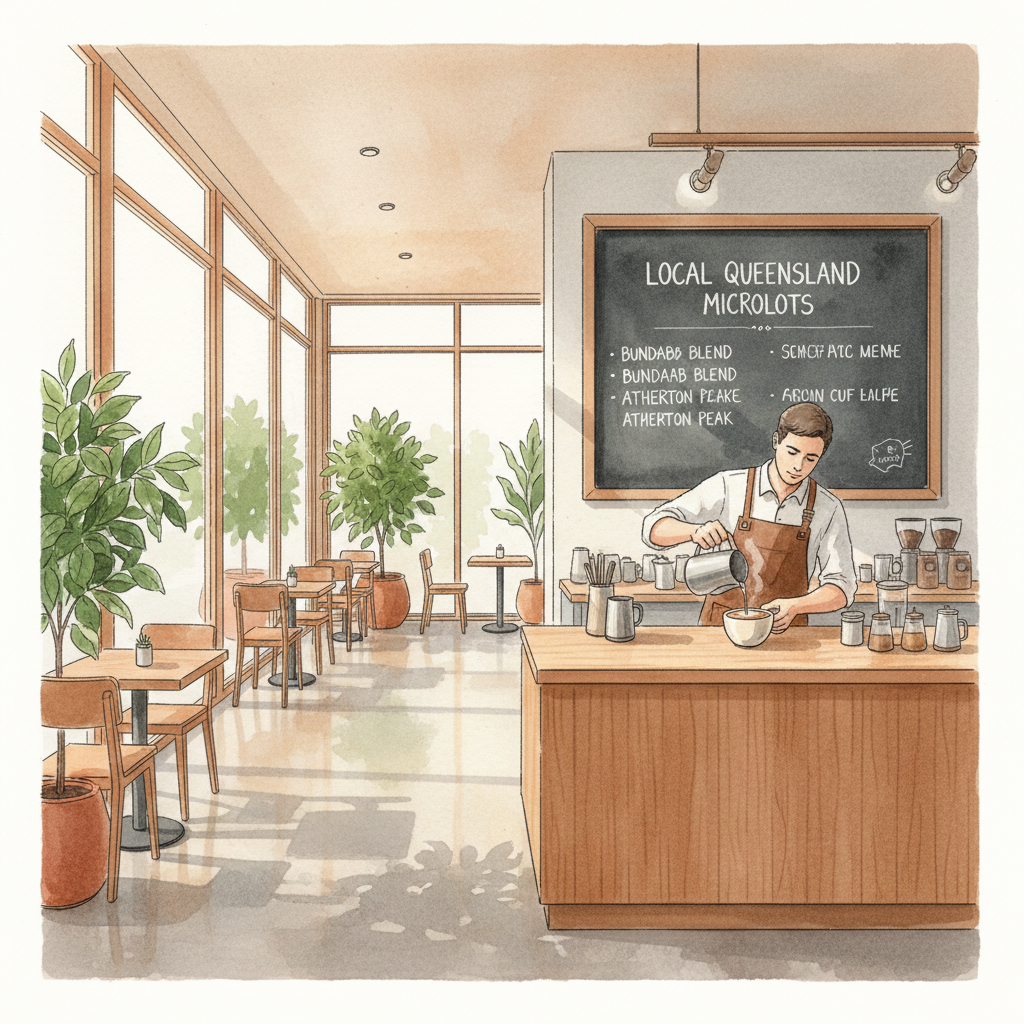
As we move into June 2026, the Australian specialty coffee landscape has undergone a tectonic shift. While the best cafes in Melbourne and the sleekest Sydney specialty coffee spots have long looked toward Ethiopia, Colombia, and Brazil for their premium beans, a new contender has finally claimed the spotlight: Australia itself. This isn’t the low-elevation, earthy commercial crop of decades past. We are talking about high-altitude, boutique-processed microlots coming straight from the lush volcanic soils of the Northern Rivers and the Sunshine Coast hinterlands. The 'local-first' movement has evolved from a sustainability goal into a high-end luxury trend that is currently defining the Brisbane third-wave coffee scene.
The Maturation of the Australian Coffee Belt
For years, the hurdle for Australian-grown coffee was altitude. Most local farms were too low to produce the dense, complex beans required for the specialty market. However, thanks to climate-resilient cultivars developed at the University of Queensland and precision 'Smart-Farm' sensor technology, growers in the Atherton Tablelands and the Byron Bay Hinterland are now producing coffee that rivals the world’s best.
In 2026, these local estates are yielding coffees with incredibly clean acidity and distinct profiles. We are seeing a massive surge in Brisbane coffee roasters securing exclusive 'gate-to-cup' contracts. By bypassing international shipping, these roasters are offering a level of freshness that was previously impossible, with beans often roasted within days of being processed at the farm.
Where to Experience the Homegrown Trend in Brisbane
If you are looking for the best cafes in Brisbane to sample these local gems, the options are expanding rapidly. Several flagship venues have dedicated their entire 'Origin of the Month' programs to Australian estates.
The Maillard Project, Brisbane CBD
Located on Charlotte Street, The Maillard Project has been a pioneer in showcasing Queensland-grown beans. Their 2026 winter menu features a 'Zeta’s Estate' microlot from Northern NSW, processed using a double-anaerobic fermentation method that brings out notes of wild strawberry and macadamia. It is a masterclass in what local coffee can achieve.
Industry Beans, Newstead
While they have a massive presence in the Melbourne cafe culture, Industry Beans Newstead has leaned heavily into the local movement for their Brisbane audience. Their 'Australian Series' espresso is a staple for regulars, offering a creamy body that makes for a quintessential Australian flat white.
Veneziano Coffee Roasters, West End
Veneziano has always been at the forefront of roasting technology. In 2026, they are using AI-driven roasting profiles specifically calibrated for the lower density of Australian-grown Arabica. Their West End tasting room is the perfect spot to compare a local 'Binna Burra' harvest against traditional high-altitude imports.
The Flavor Profile of 2026: What to Expect
What does 2026 Australian specialty coffee actually taste like? Unlike the heavy, chocolatey profiles of the past, the new wave of local beans is surprisingly bright.
- Macadamia and Honey: A signature trait of beans grown in the volcanic soils of Southeast Queensland.
- Stone Fruit Acidity: Many of the new high-altitude harvests exhibit a refined nectarine or apricot brightness.
- Silky Mouthfeel: Due to the shorter supply chain, the natural oils in the beans remain intact, providing a superior texture in milk-based drinks.
This profile is perfectly suited to the Australian flat white, where the sweetness of local dairy (or the increasingly popular Victorian oat milks) complements the nutty undertones of the homegrown espresso.
Sustainability and Carbon-Negative Logistics
The primary driver of this trend isn’t just taste; it is the environment. In 2026, carbon taxes on international shipping have made imported beans more expensive, while local logistics have become more efficient. By drinking coffee grown within a 500-kilometre radius, Brisbane coffee lovers are significantly reducing their 'cup-print.'
Many Brisbane specialty coffee shops are now displaying 'Food Miles' on their menus, and local estates are leading the way in regenerative agriculture. These farms use solar-powered processing mills and closed-loop water systems, making your morning caffeine hit more ethical than ever before.
The Future of the Australian Specialty Scene
As we look toward the rest of 2026, expect the homegrown revolution to spread beyond Brisbane. While Sydney specialty coffee and Melbourne’s best cafes are already catching on, the proximity of Brisbane to the actual farms gives it a unique edge. We are seeing a rise in 'Coffee Tourism,' where Brisbane locals spend weekends visiting estates in the Sunshine Coast hinterland, much like one might visit a winery in the Yarra Valley.
Whether you are a die-hard espresso enthusiast or someone who just wants the best Australian flat white in town, the message is clear: the most exciting beans in the world right now aren’t coming from across the ocean—they are coming from just down the road.
Conclusion
Brisbane has officially stepped out of the shadows of its southern siblings to lead the way in local coffee production. By embracing high-altitude Australian beans, the city’s roasters and baristas are creating a sustainable, flavorful, and uniquely Australian coffee identity. Next time you visit your favorite local spot, ask for the Australian microlot—your palate (and the planet) will thank you.