Hobart’s Cool-Climate Coffee: Why Tasmania is the New Specialty Capital
Move over Melbourne; Hobart is officially Australia’s newest caffeine destination. From cool-climate roasting techniques to wild-foraged cafe menus, here is why the Apple Isle is winning the coffee game in 2026.
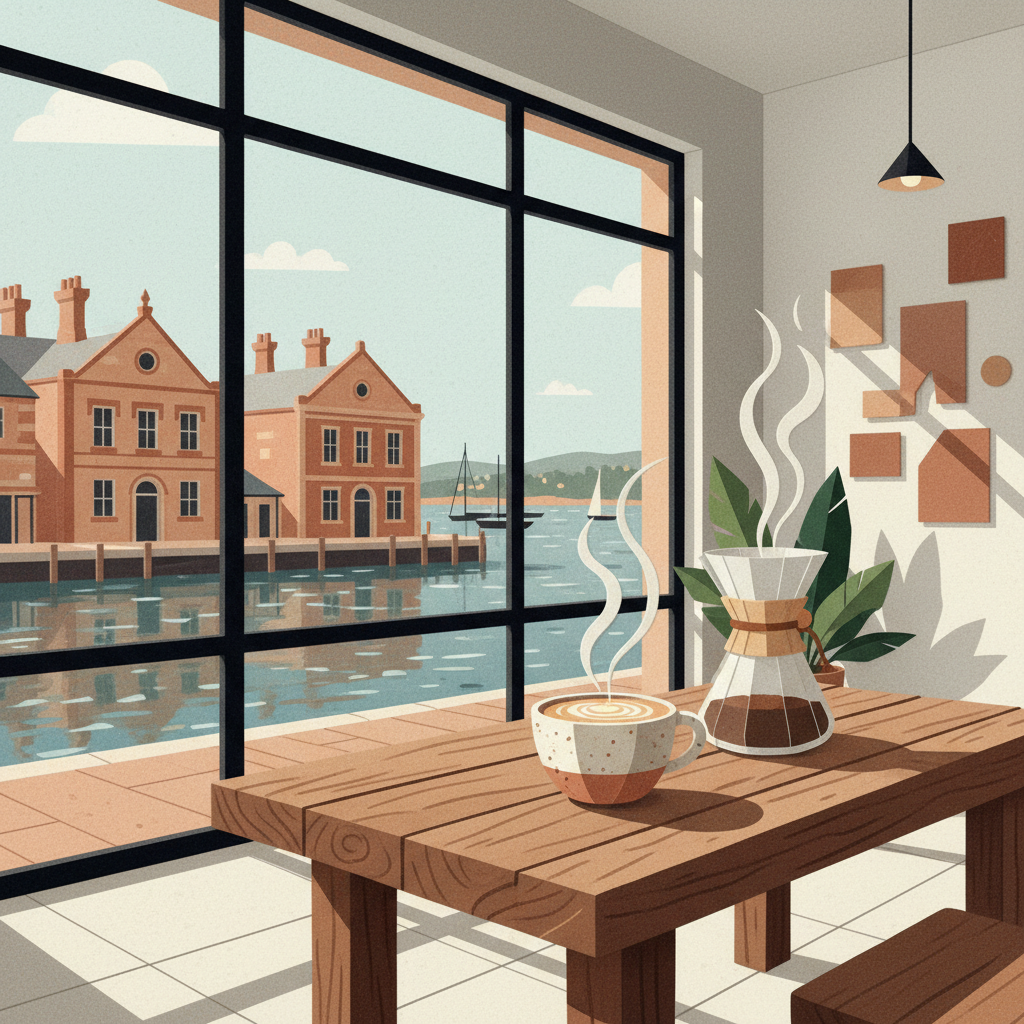
For decades, the great Australian coffee debate was a two-horse race between Melbourne’s laneway culture and Sydney’s coastal espresso bars. But as we move through 2026, a new contender has emerged from the rugged south. Hobart specialty coffee has officially reached a tipping point, transforming the Tasmanian capital into a global destination for what experts are calling 'Cool-Climate Coffee.'
While the mainland grapples with rising temperatures and urban sprawl, Hobart has leaned into its boutique scale and temperate climate to produce some of the most complex, high-clarity brews in the country. This isn't just about a good flat white; it's a movement defined by precision, local terroir, and a distinct lack of pretension. If you’re looking for the best cafes in Hobart, the landscape has never been more exciting.
The Rise of Cool-Climate Roasting
What exactly makes Tasmanian coffee roasters different? In 2026, the trend of 'Atmospheric Roasting' has taken hold. Roasters like Villino Coffee Roasters and Zimmah have pioneered techniques that utilize Hobart’s naturally low humidity and stable, cool ambient temperatures.
This environmental stability allows for a more controlled Maillard reaction during the roasting process, resulting in beans that retain higher levels of acidity and delicate floral notes that are often lost in the more humid climates of Brisbane or Perth. The result is a cup of coffee that feels cleaner and more expressive of its origin—whether that’s a high-altitude Ethiopian Yirgacheffe or a honey-processed Costa Rican.
Hobart’s Top Coffee Spots to Visit in 2026
If you find yourself wandering the historic docks or the steep streets of West Hobart, these are the essential stops for any serious coffee tourist.
1. Villino Coffee Roasters (CBD)
A pioneer of the Hobart specialty coffee scene, Villino continues to set the bar. In 2026, their focus has shifted heavily toward ultra-traceable nano-lots. Their flagship cafe on Criterion Street is the perfect place to experience a 'flight' of coffees that showcases how the same bean tastes under different fermentation processes.
2. Criterion Street Eatery
For the quintessential Hobart brunch experience, this is a must-visit. They have mastered the balance between high-end culinary innovation and a relaxed, welcoming atmosphere. Expect to find limited-edition seasonal roasts paired with locally sourced Tasmanian produce like truffled mushrooms or Bruny Island cheese.
3. Straight Up Coffee + Food
Leading the way in sustainable cafe culture, Straight Up is famous for its 100% gluten-free kitchen and its dedication to the 'Soil-to-Cup' philosophy. They work directly with Tasmanian oat milk producers to create a custom blend specifically designed for their house espresso, making it one of the best spots for alternative milk coffee in Hobart.
Why the 'Tasmanian Flat White' is Different
Every Aussie loves a flat white, but in 2026, the 'Tassie Flatty' has become a cult favorite. The secret lies in the dairy. Tasmania’s lush pastures produce some of the highest-quality milk in the world, and local baristas are using minimally processed, non-homogenized milk from the North-West coast.
When this creamy, rich milk is paired with a bright, cool-climate roasted espresso, the result is a flavor profile that is sweeter and more textural than the standard Sydney specialty coffee offerings. It’s a richer, more indulgent experience that perfectly suits the crisp Hobart air.
The Sustainability Edge: Closed-Loop Cafes
Tasmania has always been at the forefront of environmentalism, and its coffee scene is no different. In 2026, many Hobart cafes have moved beyond simple composting. We are seeing a surge in 'Closed-Loop' systems where coffee grounds are sent to local fungi farms to grow oyster mushrooms, which then return to the cafe’s brunch menu.
Cafes like Ginger Brown in South Hobart have integrated these circular economies into their business models, proving that Australian specialty coffee can be both world-class and zero-waste. This commitment to the environment is a major drawcard for the 'conscious consumer' demographic that is dominating the 2026 market.
Regional Growth: Beyond Hobart
The coffee revolution isn't confined to the capital. The Tasmanian Coffee Trail now extends into the Huon Valley and up to Launceston. Roasters are setting up shop in refurbished apple sheds and historic sandstone buildings, offering a 'slow coffee' experience that encourages visitors to engage with the brewing process.
The Impact of Hybrid Work
With more specialty coffee professionals moving from Melbourne to the Apple Isle for a better lifestyle, the level of expertise in regional Tasmania has skyrocketed. You can now find a world-class V60 pour-over in a tiny town like Geeveston just as easily as you can on Collins Street.
Conclusion: The Future is South
As we look toward the remainder of 2026, it’s clear that Hobart is no longer the 'little sibling' of the Australian coffee world. Its unique combination of cool-climate roasting, exceptional local dairy, and a deep-rooted commitment to sustainability has created a coffee culture that is uniquely its own.
Whether you’re a local or a visitor from the mainland, the Hobart specialty coffee scene offers a glimpse into the future of the industry: one where quality, environment, and community are perfectly extracted into every cup. Next time you’re planning a caffeine-fueled getaway, skip the flight to Melbourne and head south to the island—your palate will thank you.